
How to Care for a Christmas Cactus in Winter
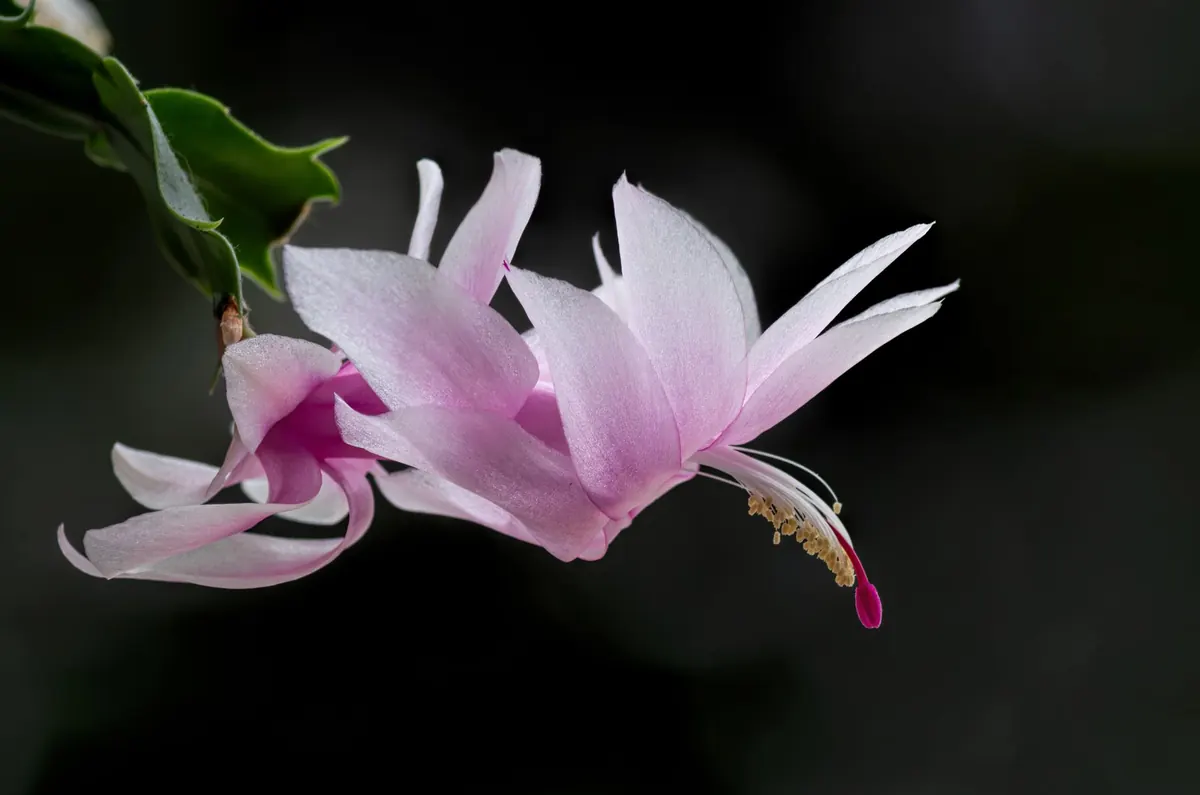
When the days shorten, most houseplants quietly give up and wait for spring. The Christmas cactus does the opposite. Give it the right conditions in autumn and early winter and it will push buds from the tips of its flat green segments, opening into pink, red, white or orange flowers somewhere around Christmas — and often a smaller second flush in January. Get the details wrong and you will know about it: buds shrivel and drop, or the plant sits sullenly until March without a single bloom. The good news is that its needs are simple, just a little more precise than those of most houseplants.
A rainforest cactus, not a desert one
The first thing to unlearn is the word cactus. A Christmas cactus (Schlumbergera) grows on tree branches in the damp coastal forests of Brazil, in dappled shade with humid air moving around it. It wants neither sandy desert compost nor a bone-dry pot, and it certainly does not want strong sun beating down on it. What it likes is bright but filtered light, compost that drains quickly and stays slightly humid, and cooler nights than most of us keep in a heated living room. Once you picture that rainforest branch, the rest of the winter care makes sense.
Light and darkness: the trigger for flowering
Christmas cactus buds form in response to long, uninterrupted nights. This is the single most useful thing to know about getting flowers. From mid-September onwards, aim for about twelve to fourteen hours of darkness each night and eight to ten hours of bright, indirect daylight.
The tricky part is what counts as darkness. A room lamp switched on at nine in the evening, a hall light left on, or a street lamp behind thin curtains is enough to confuse the plant. If your cactus lives in a room you use after dark, either move it to a spare bedroom or cover it with a cardboard box or an upturned wastepaper basket from around 5pm until the morning. Do this for six to eight weeks, until buds are clearly visible, then the darkness routine is finished for the year.
By day, keep it near a bright window but out of direct sun. Segments that turn an even, healthy red at the edges are usually responding to strong light; pale, bleached patches mean it has been scorched.
Watering: enough, but never soggy
Overwatering kills more Christmas cacti than anything else. The compost should be allowed to dry a little between waterings, but never to the point where the segments start to look thin and wrinkled. A workable rule is to water when the top two or three centimetres feel dry to the touch, then let the pot drain properly and tip away anything left in the saucer.
In practice that might mean every seven to ten days in a warm room in autumn, and closer to every two weeks somewhere cooler. After flowering, in the depths of winter, ease off a little further. Tepid water is kinder than cold; a blast of chilly tap water can shock the roots.
What the plant is telling you
- Slightly limp, thin segments: it is dry — give it a thorough watering and check again in a few days.
- Yellowing or mushy segments near the base: too wet. Let the compost dry out, and if the base feels soft, take the plant out, trim any rotten roots and repot into fresh, gritty compost.
- Buds dropping before they open: usually a sudden change — a move, a draught, a temperature swing or compost that has gone from bone dry to sodden.
- No buds by mid-December: the nights were probably too short or too warm, or evening light was interrupting the dark period.
Temperature and humidity
Cool nights help trigger flowering. Around 10–13°C overnight and 18–21°C during the day is ideal while buds are forming, though long nights alone will often do the job. Once the plant is in flower, keep it at roughly 15–21°C; a hot, dry room shortens the life of every bloom.
Position matters more than numbers. Keep the pot away from radiators, gas fires and draughty doorways, and away from windows that get very cold after dark. Grouping it with other plants lifts the humidity around it, and a tray of pebbles with a little water underneath works well too. If you mist, aim at the air around the plant rather than directly at open flowers, which mark easily.
Once the buds appear, leave it alone
Christmas cacti are famously temperamental about change. Once buds have set, find the spot where the plant will flower and keep it there. Do not turn the pot, do not move it to the kitchen for Christmas lunch, and do not repot it. Save any repositioning for spring, when the plant is growing rather than flowering.
Stop feeding while the plant is in bud and flower. In spring, when new segments start to appear, resume with a diluted balanced houseplant feed every two to four weeks. Repot only every two or three years, in spring, into a mix of roughly two parts general-purpose compost, one part orchid bark and one part grit. Choose a pot only slightly larger than the old one — a Christmas cactus flowers best when it is a little snug in its pot.
After the flowers fade
Pick off spent flowers as they wilt, then give the plant a few weeks of relative rest: less water, no feed, a cooler spot. When you see the first new growth, twist off the last one or two segments of each stem. It feels brutal the first time, but it encourages branching, which means more tips, and more tips means more flowers next December. The segments you remove can be left on a windowsill for a day to callous, then pushed into damp compost to make new plants.
Watch for white, cottony blobs in the joints of the segments — mealybugs. A cotton bud dipped in surgical spirit deals with small numbers. Fine webbing in warm, dry conditions points to red spider mite, which dislikes humidity. Fungus gnats hovering over the pot usually mean the compost is staying too wet. And do not worry if your plant skips a year: a Christmas cactus that has been moved, repotted or neglected may simply rest for a season. Keep the conditions steady and it will flower again.
A winter routine that works
None of this needs to be complicated. Check the compost once a week with a finger rather than a calendar. Water thoroughly when the top couple of centimetres are dry, and let it drain. Keep the plant cool, humid and out of direct sun, and give it genuinely dark nights from September until the buds appear. Then leave it where it is, keep feeding for spring, and enjoy the flowers. If a bud or two drops along the way, adjust the watering and temperature rather than the plant's position — steady conditions are what a Christmas cactus wants most.
Photo: Thierry Mauger / Pexels